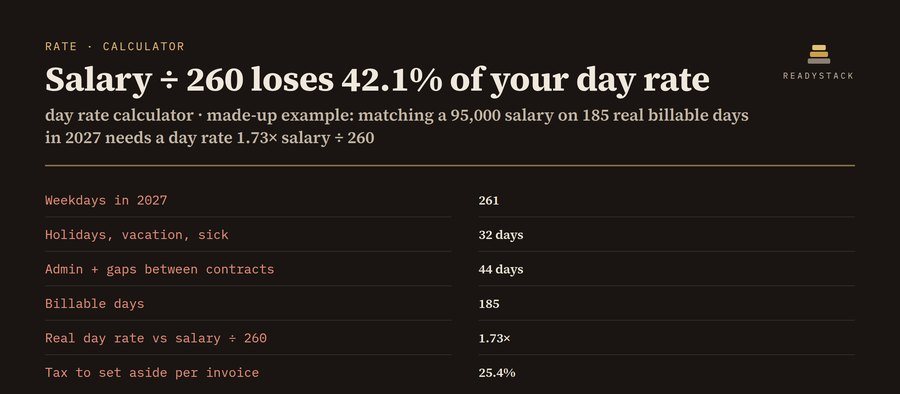
Your numbers
Pro: keep every rate, track the year, take the files
- Saved rates for each client or contract, side by side: day rate, billable days, invoices and tax set-aside in one table.
- Year tracker: type what you actually invoiced each month and see if you are ahead or behind, plus the day rate the rest of the year needs when a contract ends early.
- Excel .xlsx with 3 sheets and live formulas (Rate, Tax, Months): change a vacation day or a month's invoice and the day rate and targets recalculate.
- Invoice calendar .ics (Google Calendar, Outlook, iPhone): one reminder a month with that month's target invoice and the tax to set aside.
- Project quote: estimated days × your day rate + a contingency %, printed with the rate card (day, half day, hourly and weekly rate) or saved as PDF. Plus CSV and a JSON backup to move to another browser.
Pro: $19 once, for every scenario and every year you plan.
Project quote
Year tracker: what you actually invoiced
How the day rate is worked out
- What the job leaves you. The salary minus what an employer withholds (US: FICA and federal income tax with the standard deduction, plus your state %; UK: Class 1 NI and income tax), plus the benefits you now pay yourself.
- What you must invoice. The revenue whose profit, after your business costs and the self-employed tax, leaves exactly that amount. US: self-employment tax 15.3% on 92.35% of profit (the 12.4% part up to the wage base), half of it deducted, the 20% QBI deduction under the threshold, the year's brackets. UK: Class 4 NI 6% from £12,570 to £50,270 and 2% above, income tax 20/40/45% with the Personal Allowance tapered over £100,000.
- Billable days. Weekdays in the year minus the public holidays, vacation, sick days, 12 months of admin days and 5 days for each week between contracts.
- Day rate = invoice needed ÷ billable days, rounded up to the cent. Hourly = day rate ÷ billable hours.
Rates are before VAT or sales tax. Benefits are treated as after-tax money (a pension or SE health deduction would lower the rate a little). Not covered: Scottish income tax bands, UK limited companies and dividends, IR35, student loans, the US QBI phase-in above the threshold (no QBI is taken there, so the rate errs high). A calculation with your numbers, not tax advice.
Sources, read on 12 November 2026
- IRS Rev. Proc. 2026-35 (tax year 2027 brackets, $16,600 / $33,200 standard deduction, QBI threshold $208,300 / $416,600) · Rev. Proc. 2025-32 (2026) · irs.gov/pub/irs-drop
- IRS Publication 15 (2026): Social Security wage base $184,500. The 2027 base could not be read today, so $184,500 is used for 2027 too; it only matters once 92.35% of profit passes it.
- GOV.UK Income Tax rates and Personal Allowances; Self-employed National Insurance rates (2026 to 2027); Rates and thresholds for employers 2026 to 2027. The 2026/27 bands are used for the whole calendar year.
- GOV.UK bank holidays (England and Wales) · US federal holidays by the 5 U.S.C. 6103 rule (a Saturday holiday is taken on Friday, a Sunday one on Monday).
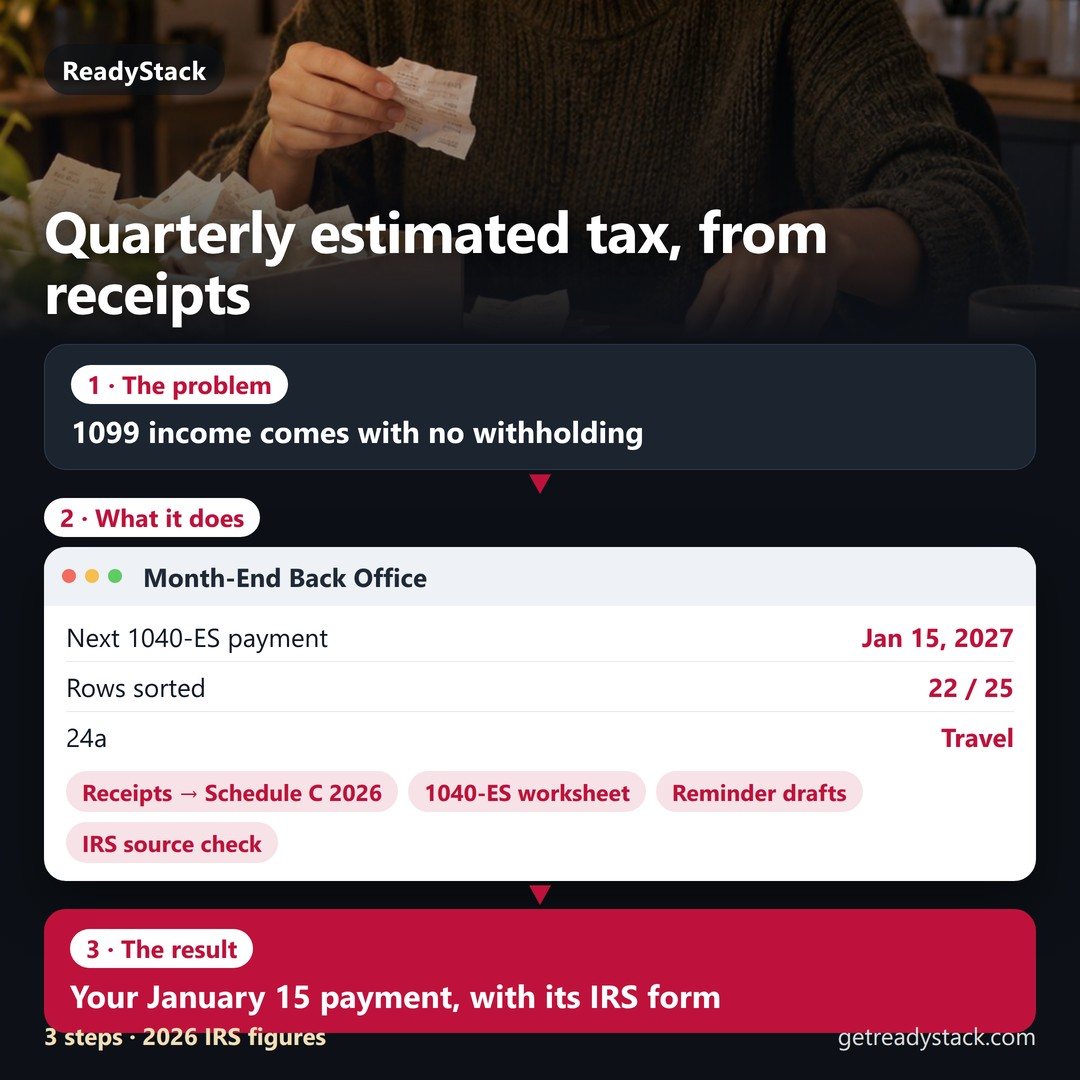
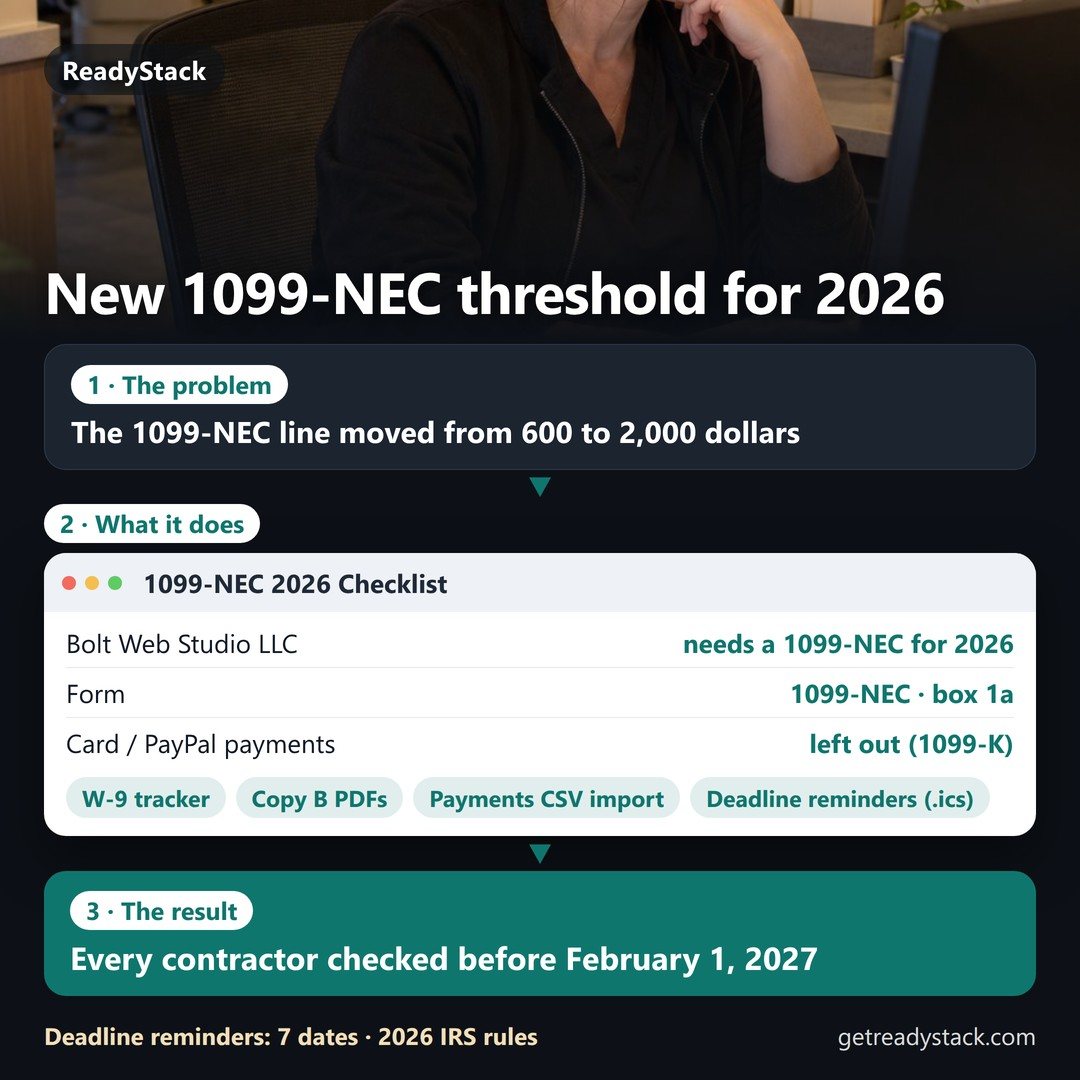
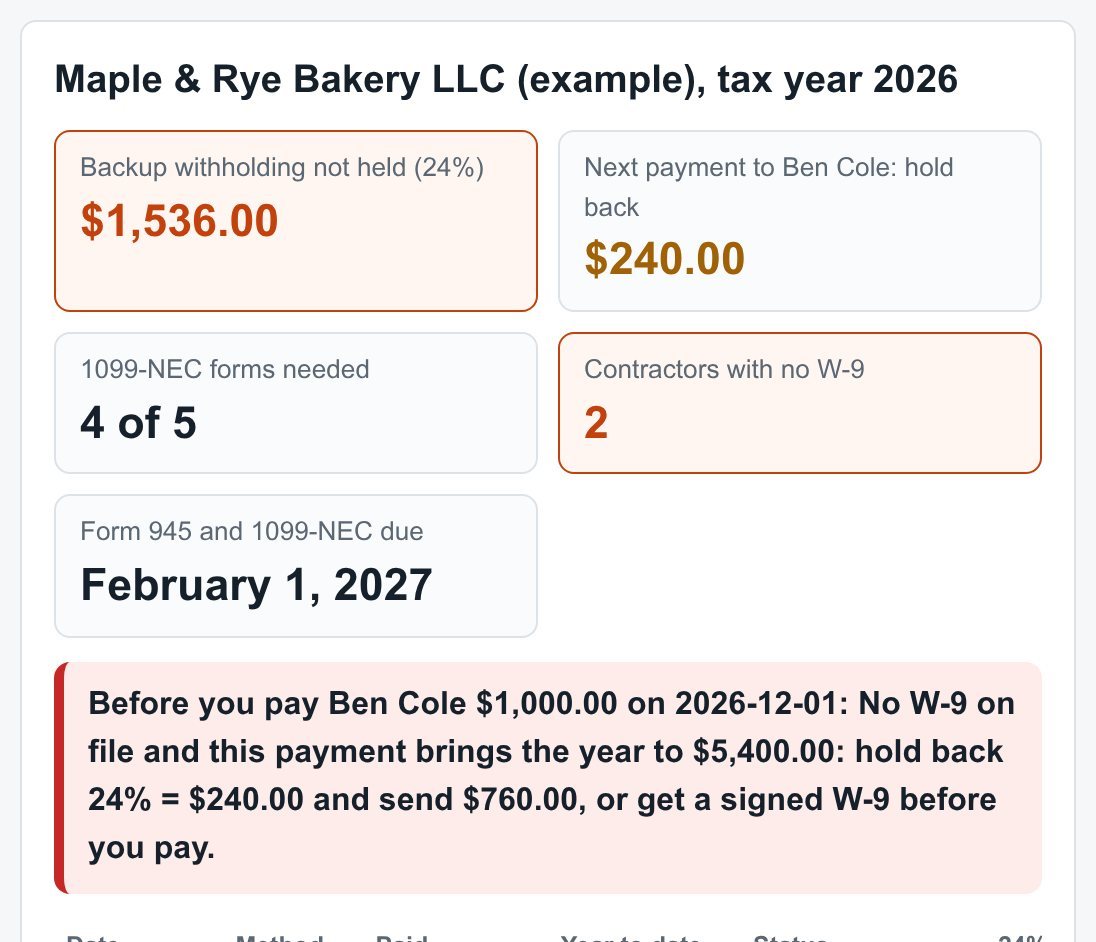 1099 tracker | payments, W-9 status, 24% backup withholding
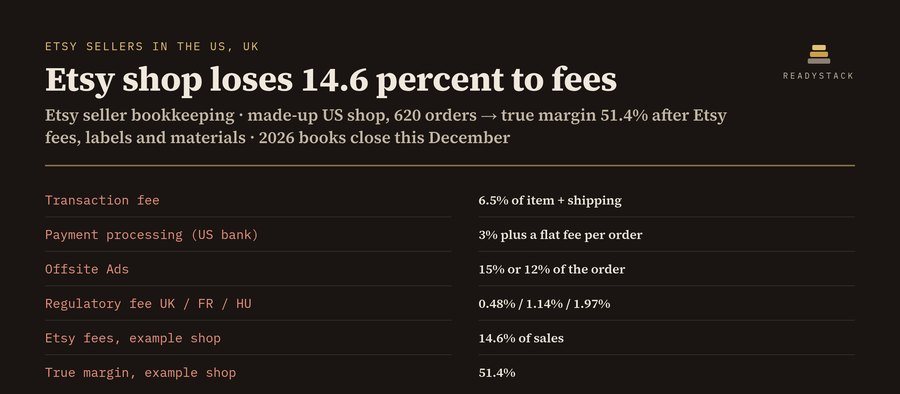 Etsy bookkeeping spreadsheet 2027: every Etsy fee, true profit and your Schedule C lines
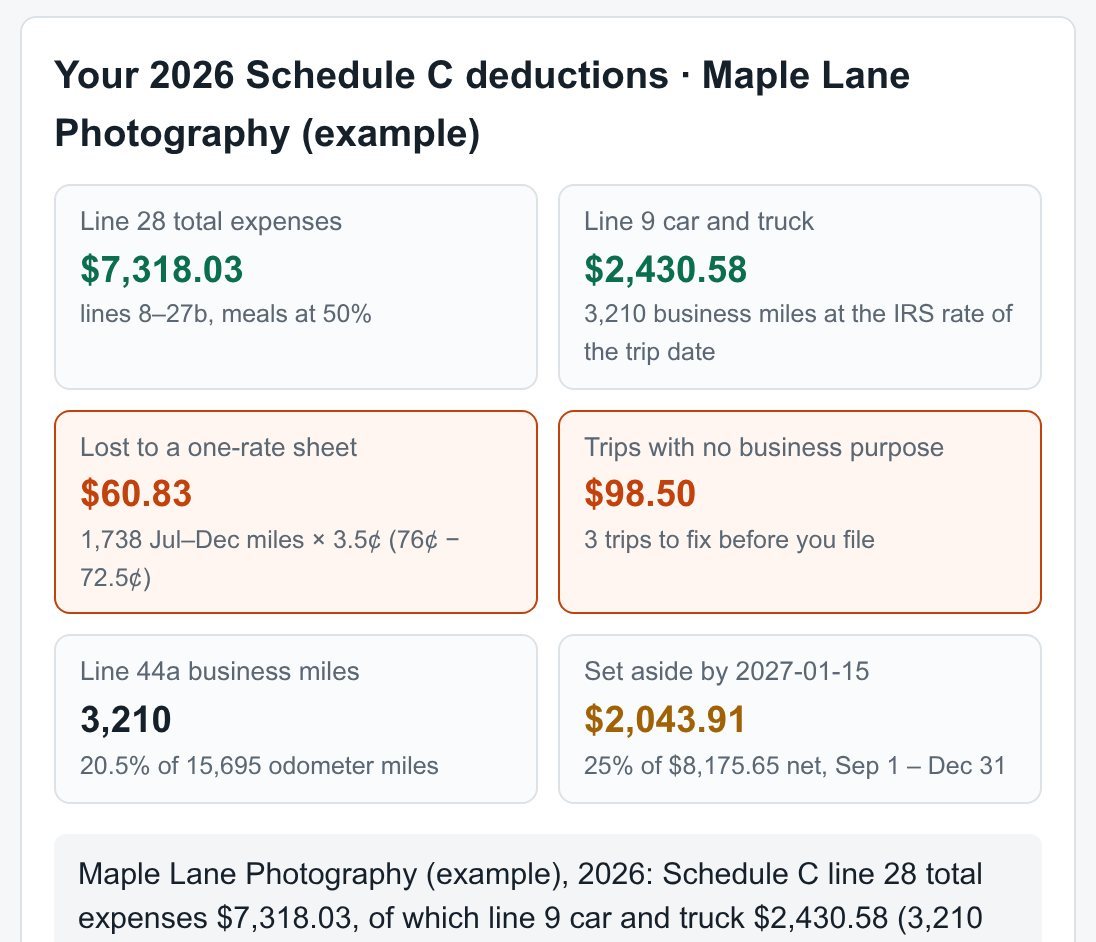 small business planner | Expense & Mileage Tracker | Schedule C 2026 | Estimated Tax Set-Aside
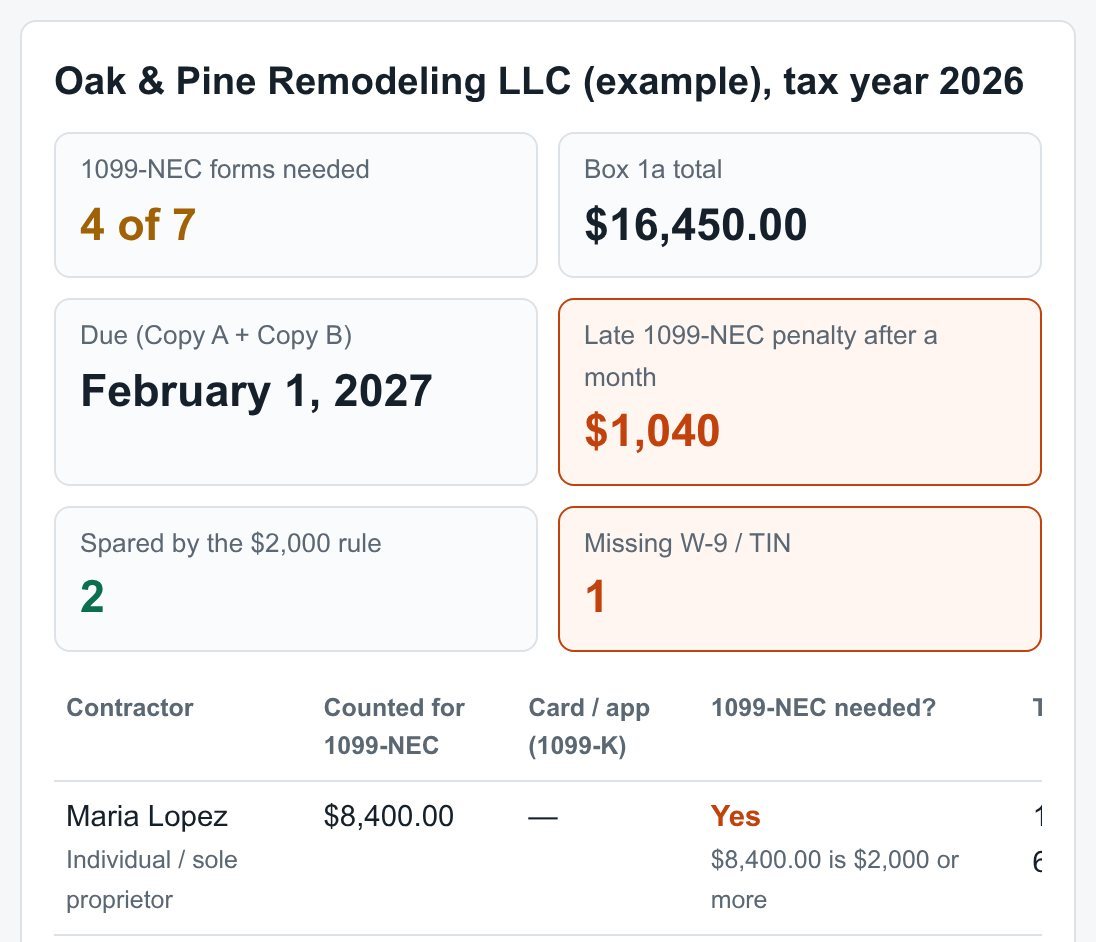 1099 nec fillable form 2026 | contractor log + Copy B
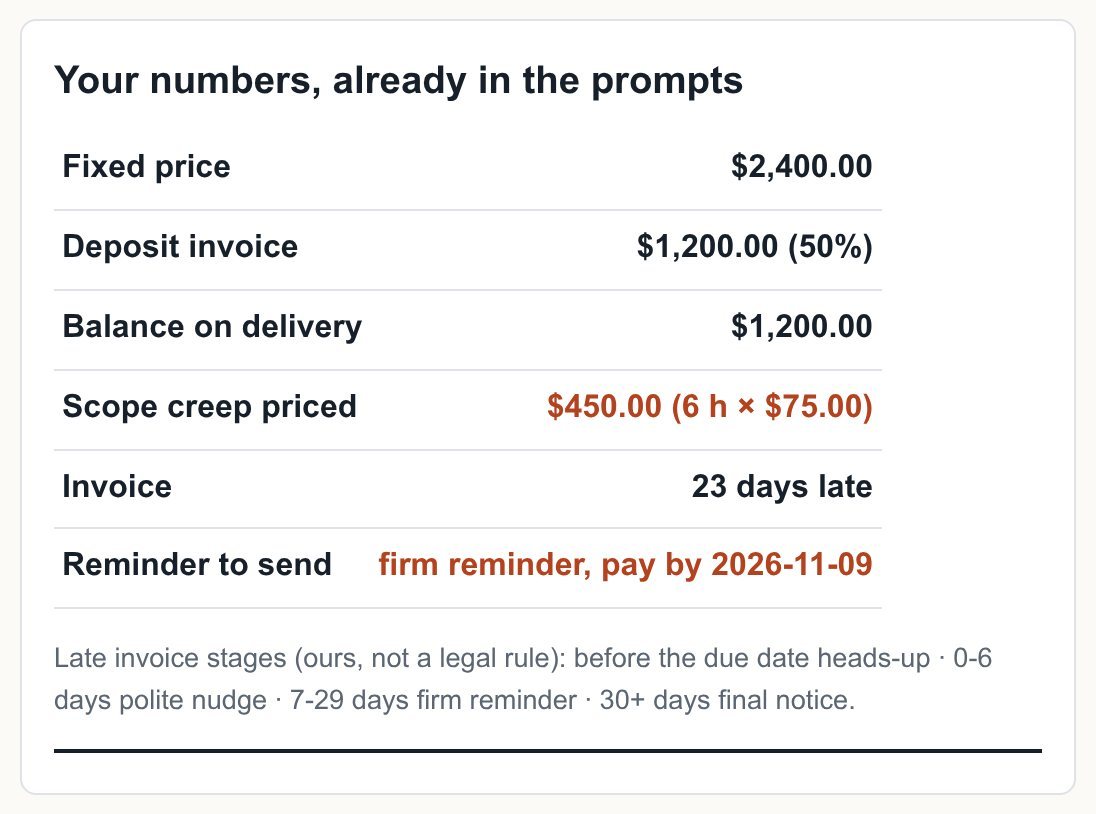 AI prompt packs for freelancers: pitch to paid invoice