Etsy spreadsheet for makers: log material purchases and recipes, open your Etsy orders CSV, count the shelf on 12/31 and get Schedule C Part III lines 35 to 42 and what…
Example (made-up): Juniper Wick Candles, an Etsy candle shop, 2026. The 12/31 count finds 8.5 lb of soy wax ($29.33) was lost to spills and failed pours, and $44.18 of materials missing in all (44.18 dollars). Schedule C Part III: line 41 ending inventory $501.62, line 42 cost of goods sold $1,572.78.
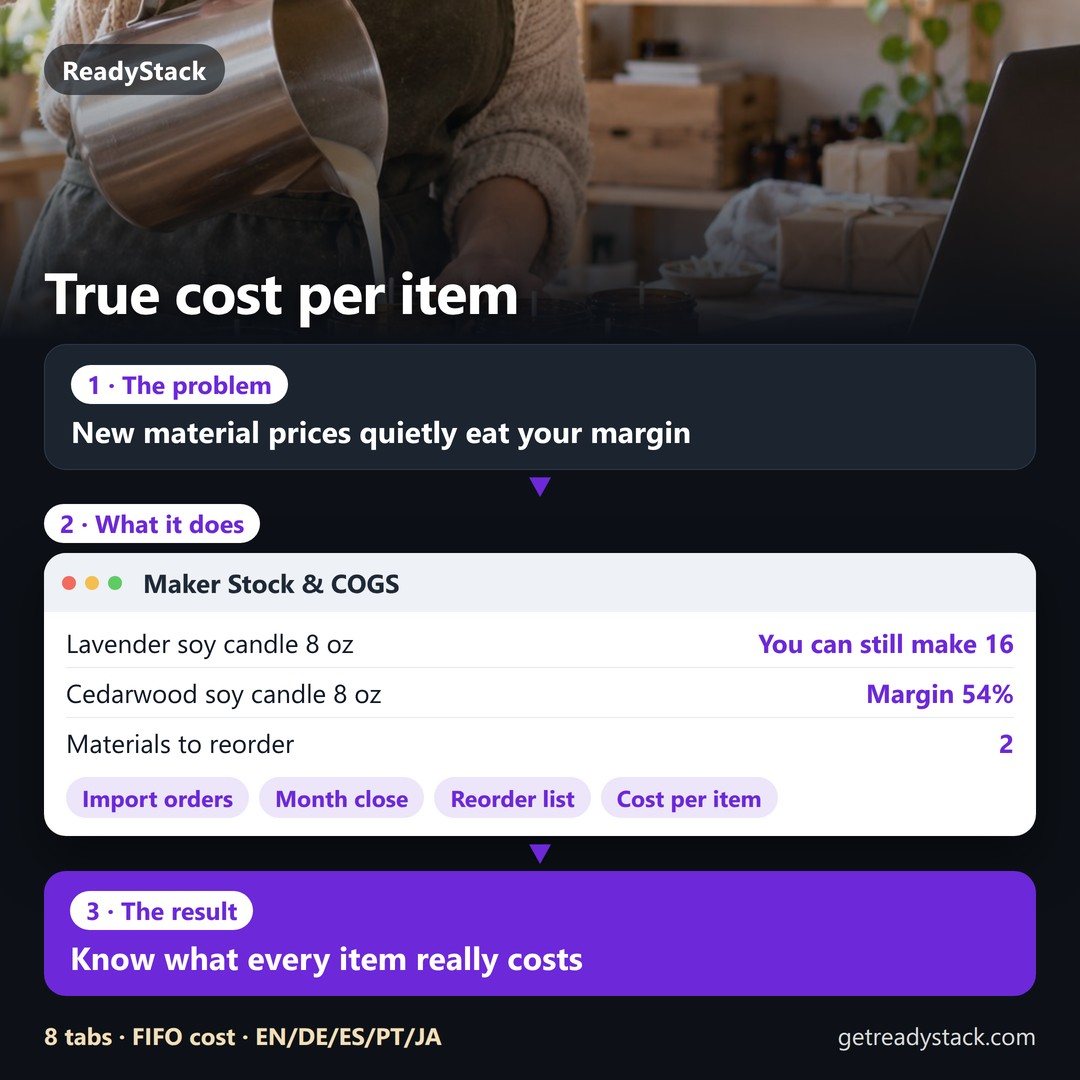
Etsy fee and profit sheets stop at the sale. This one follows your materials from the purchase to the 12/31 shelf: it reads your Etsy orders CSV, uses your recipes to work out what you made, and prices what is left with your latest purchases (FIFO).
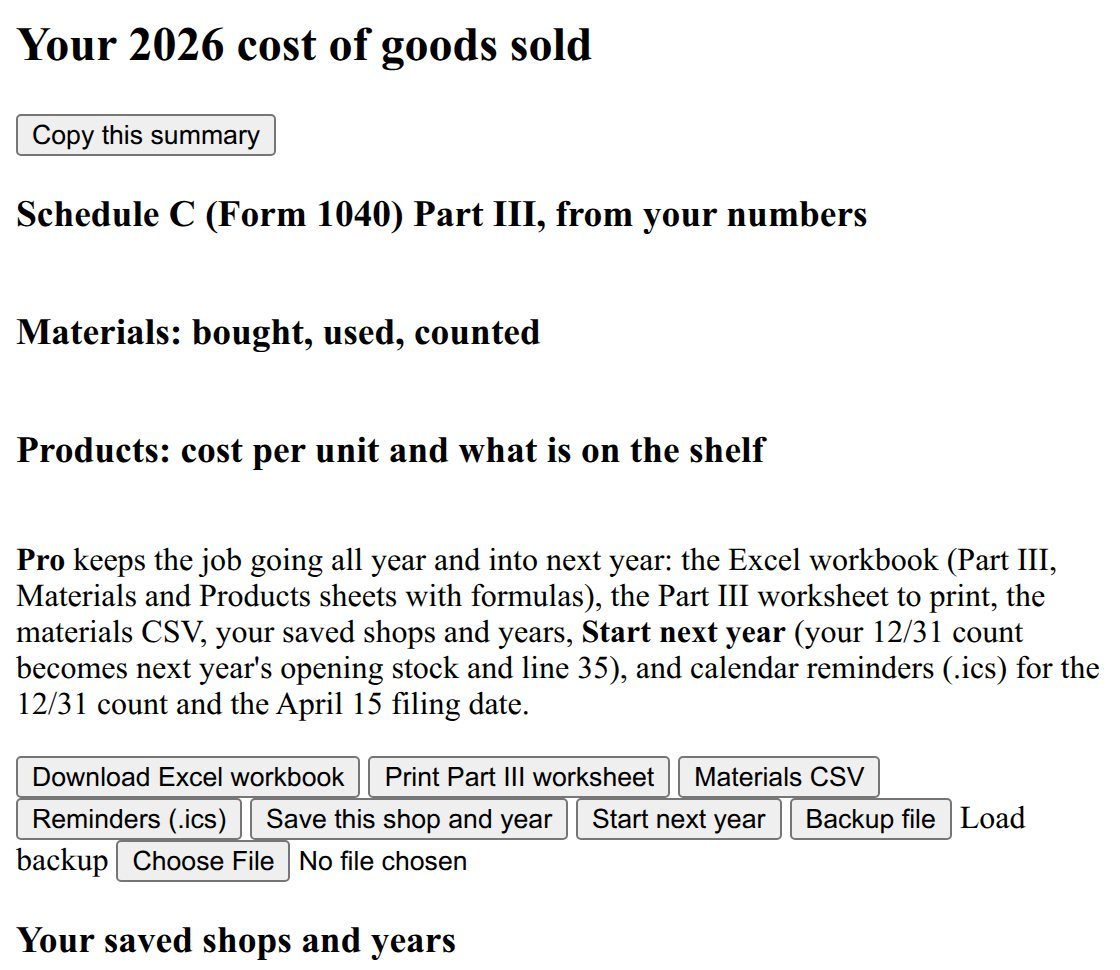
Schedule C (Form 1040) Part III, from your numbers
Materials: bought, used, counted
Products: cost per unit and what is on the shelf
Pro keeps the job going all year and into next year: the Excel workbook (Part III, Materials and Products sheets with formulas), the Part III worksheet to print, the materials CSV, your saved shops and years, Start next year (your 12/31 count becomes next year's opening stock and line 35), and calendar reminders (.ics) for the 12/31 count and the April 15 filing date.
Lines 33 to 42 follow the Schedule C (Form 1040) 2026 form, Part III Cost of Goods Sold (irs.gov/pub/irs-pdf/f1040sc.pdf, read 2026-11-12): 35 inventory at beginning of year, 36 purchases less cost of items withdrawn for personal use, 37 cost of labor (not amounts paid to yourself), 38 materials and supplies, 39 other costs, 40 add lines 35 through 39, 41 inventory at end of year, 42 = line 40 minus line 41, entered on line 4.
Line 33: the page values closing inventory at cost. Raw materials take the cost of your latest purchases (first in, first out). A finished piece takes its recipe materials at those prices; labor is not spread into finished pieces. If you value another way, change line 41 in the Excel file.
The 2025 Instructions for Schedule C say a small business taxpayer (average annual gross receipts of 31 million dollars or less for the 3 prior tax years, indexed for inflation, and not a tax shelter) can choose not to keep an inventory, and treat it as non-incidental materials and supplies or follow its books. See Pub. 538. This page is for sellers who keep an inventory.
Made = sold in the Etsy file + counted on the shelf at 12/31 − on the shelf at 1/1. Book quantity = opening + bought − used in what you made. Missing = book − counted, priced at your latest purchases. Missing stock is not a separate deduction: it is already inside line 42.
Etsy help (How to Download a Spreadsheet of Your Sold Transactions): the Orders download includes item title, item price and SKU numbers. Column names are matched by name, so extra or reordered columns are fine.
Not tax advice. The page does the arithmetic on your numbers; check them with your tax preparer.
Email me this result
A copy of what you see above, in your inbox — the tool stays free, nothing here is locked.
Etsy spreadsheet for makers: log material purchases and recipes, open your Etsy orders CSV, count the shelf on 12/31 and get Schedule C Part III lines 35 to 42 and what went missing.
Is it free?
Yes. The free version on this page works without an account. The full version costs $39 / year.
How do I use it?
1. Enter your details in the free version below. 2. See your result right away on this page. 3. Need more? The full version adds what is listed under "What you get".
Ask about this tool
One question, answered by the person who built it. Your email only if you want the answer sent.
For a team or company: for an invoice with your company details, a quote or several licences, write to [email protected].
 Calorie tracker with barcode scanner
 find brand sponsors already paying creators in your niche — YouTube and podcasts in one search, with the dated proof
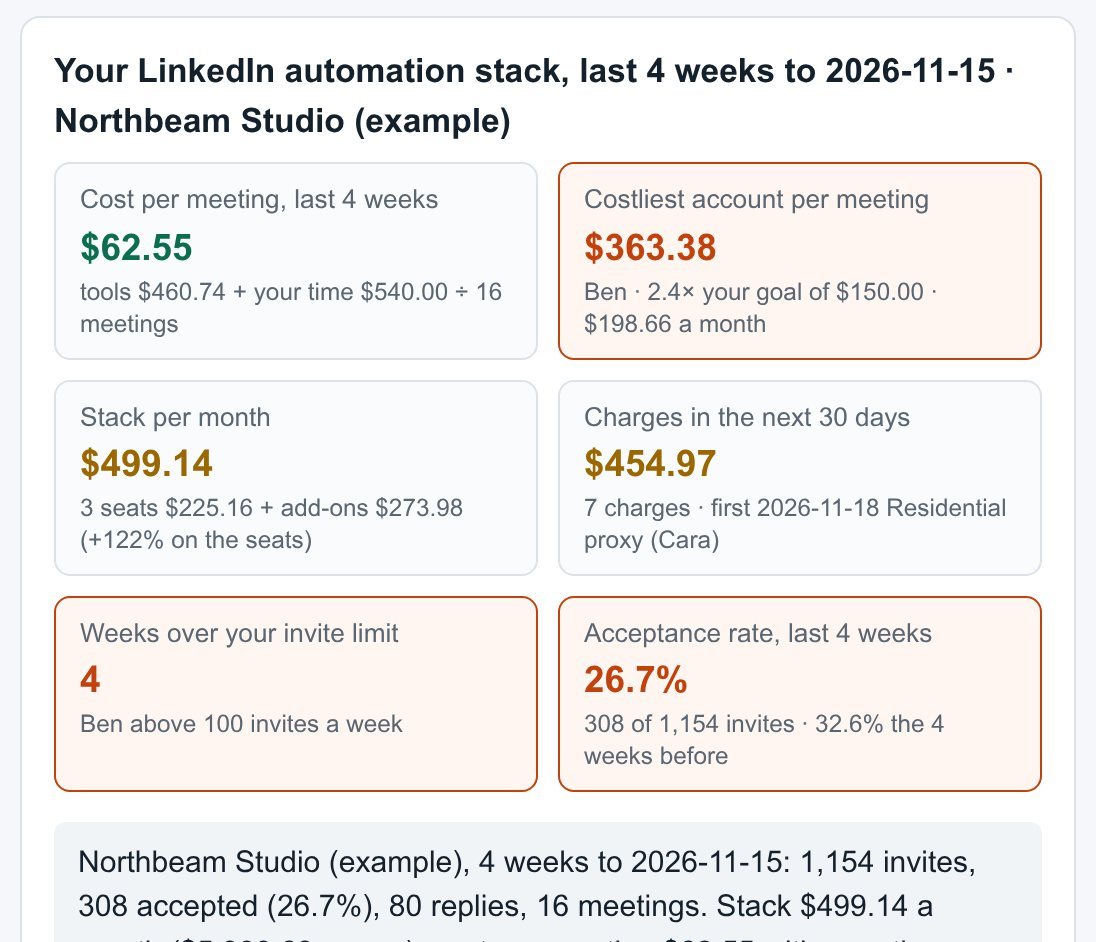 LinkedIn automation tool cost tracker | cost per meeting per account, add-ons, renewal dates
 organic dropshipping tracker | product tests, video log, real profit per order, kill or scale
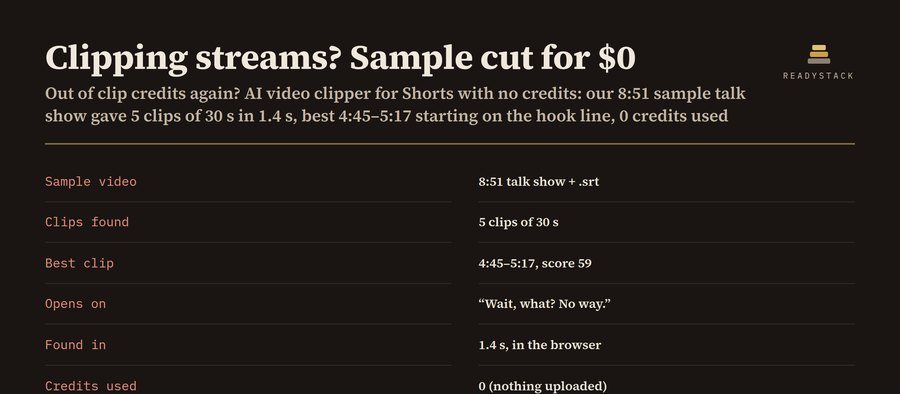 AI Video Clipper for Shorts, No Credits
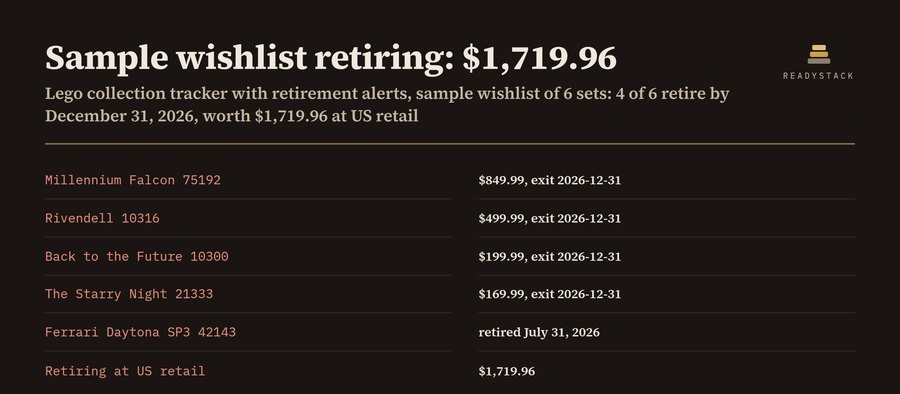 Lego Collection Tracker with Retirement Alerts
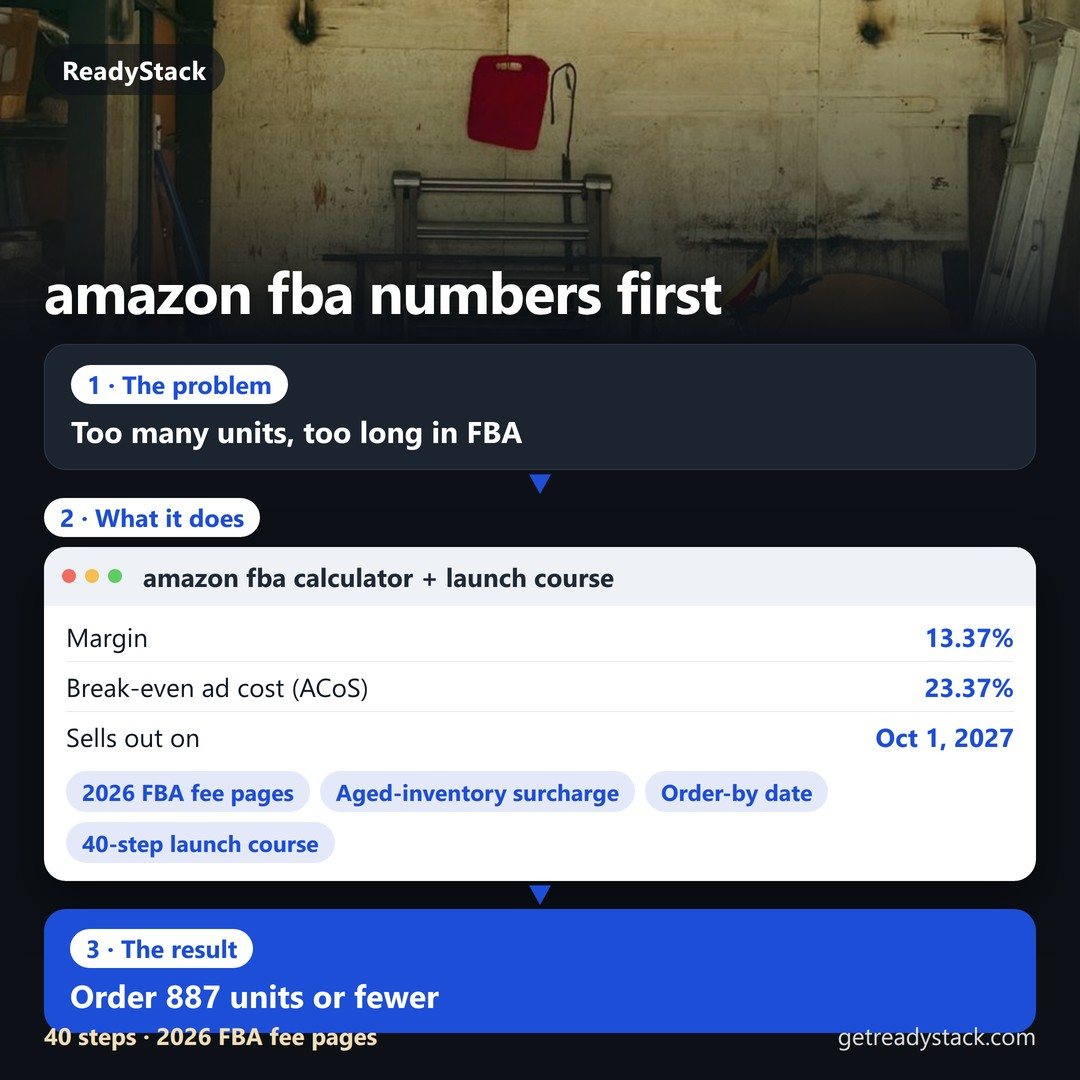 amazon fba calculator + launch course 2026: your product's fees, cash and reorder date
 car flipping calculator | net profit per car, max bid price, dealer-license sale count
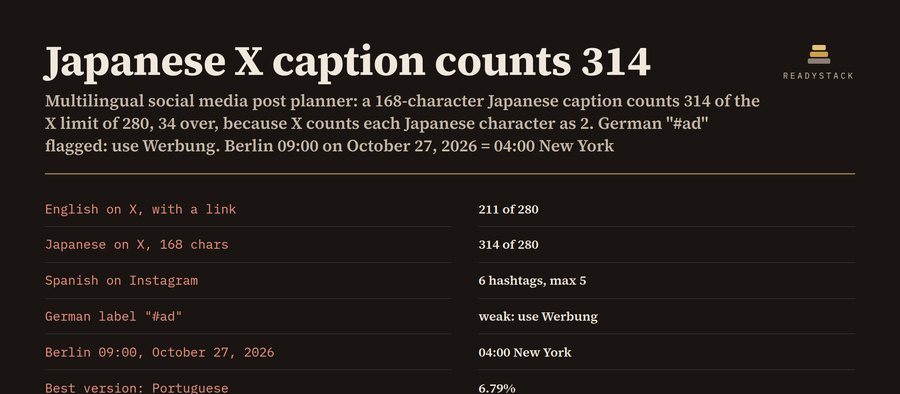 Multilingual social media post planner with analytics