One update for one income source
Amounts in pounds. Left column: the year-to-date figures you sent in your last update. Right column: this quarter’s totals from your records.
| Self-employment category | Sent last update (year to date) | This quarter |
|---|---|---|
| Turnover (sales, takings, fees) | ||
| Other business income | ||
| Cost of goods bought for resale | ||
| Construction industry subcontractors | ||
| Wages, salaries and staff costs | ||
| Car, van and travel expenses | ||
| Rent, rates, power and insurance | ||
| Repairs and maintenance | ||
| Phone, stationery and office costs | ||
| Advertising costs | ||
| Business entertainment | ||
| Interest on bank and other loans | ||
| Bank, credit card and finance charges | ||
| Irrecoverable debts written off | ||
| Accountancy, legal and professional fees | ||
| Depreciation and loss on sale | ||
| Other business expenses |
| Property category | Sent last update (year to date) | This quarter |
|---|---|---|
| Rents and other property income | ||
| Premiums for the grant of a lease | ||
| Reverse premiums and inducements | ||
| Other property income | ||
| Rent, rates, insurance, ground rents | ||
| Property repairs and maintenance | ||
| Non-residential loan interest and finance costs | ||
| Residential finance costs (mortgage interest) (own line) | ||
| Legal, management and professional fees | ||
| Cost of services provided, including wages | ||
| Travel costs | ||
| Other allowable property expenses |
Do you have to use MTD for Income Tax?
The answer appears at the end of the result above.
Qualifying income = gross self-employment turnover + gross property income before expenses (your share of a joint property). Employment, partnership shares, dividends and pensions do not count.
Pro: every income source, all four updates, all year
The update above is free and complete. Pro keeps the records behind it: each business and each property as its own income source, dated records you add or import from a bank CSV, and all four cumulative updates worked out from the dates. Mark an update as sent and the next one shows any corrections to earlier periods. Download the update CSV for your bridging software, the records CSV and a deadline calendar.
- Unlimited income sources: sole trades, UK property, foreign property
- Dated digital records with an HMRC category on each line
- Bank statement CSV import with categories guessed from the description
- All four year-to-date updates worked out from the record dates
- Mark sent: the next update lists corrections to earlier periods
- Update CSV per period for bridging software (CSV import is a digital link)
- Deadline calendar (.ics) with a 7-day alert, records CSV and JSON backup
- Next tax year in one click, with late updates counted against the 4-point line
Open Pro — $29 per year or $5.99 per month
The four updates
| # | Period (year to date) | Due | Income | Expenses | Profit | Status |
|---|
Records
| Date | Description | Amount | Category |
|---|
Worked example: update 2 of 2026-27 for a sole trader
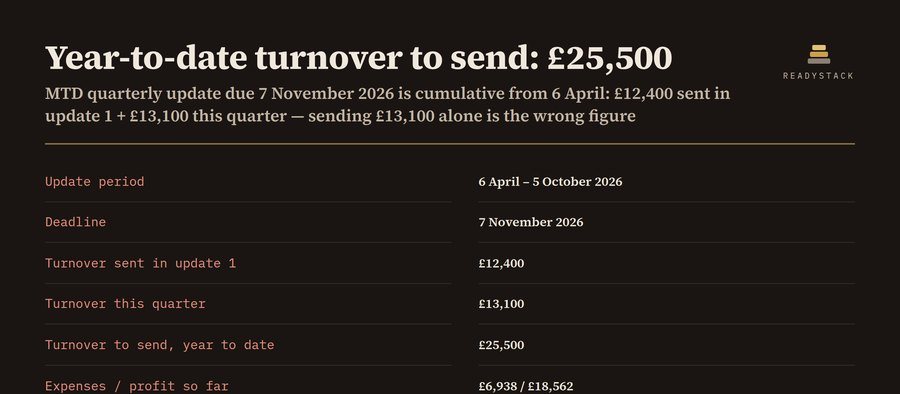
A sole trader on standard periods sent update 1 (6 April to 5 July 2026) with turnover £12,400, cost of goods £2,150, travel £610, office £340, advertising £220 and bank charges £45. From 6 July to 5 October 2026 the records show turnover £13,100, cost of goods £2,380, travel £655, office £310, advertising £180 and bank charges £48.
| Update 2 period | 6 April 2026 to 5 October 2026 |
| Deadline | 7 November 2026 |
| Turnover to send (year to date) | £25,500 |
| Turnover if you send only the quarter (wrong) | £13,100 |
| Total expenses year to date | £6,938 |
| Profit so far | £18,562 |
| Turnover on course for the year | £51,000 (under £90,000: one total expenses figure allowed) |
Do you have to start? 2025-26 return: self-employment turnover £22,000 + gross rents £9,600 = qualifying income £31,600, which is £1,600 over the £30,000 line, so quarterly updates start on 6 April 2027.
What this app does and does not do
It works out the figures. It does not send anything to HMRC. Your HMRC-recognised bridging software uploads the update CSV and submits it; gov.uk lists CSV importing and exporting as a digital link, while retyping or copy-and-paste between programs is not. Rules used: cumulative update periods and the 7 August, 7 November, 7 February and 7 May deadlines; one total expenses figure allowed under £90,000 turnover per income source (no limit for foreign property); residential finance costs always on their own line; no penalty points for late quarterly updates in 2026-27; final declaration by 31 January after the tax year.
A calculation and record-keeping tool, not tax or legal advice. Your figures stay in this browser.
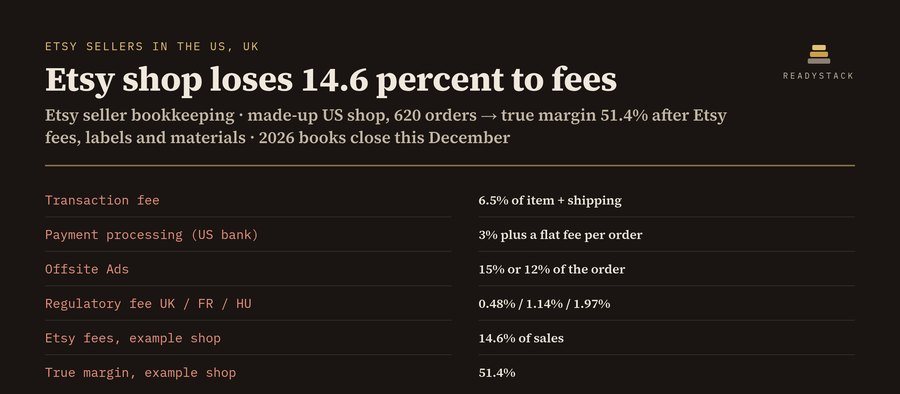 Etsy bookkeeping spreadsheet 2027: every Etsy fee, true profit and your Schedule C lines
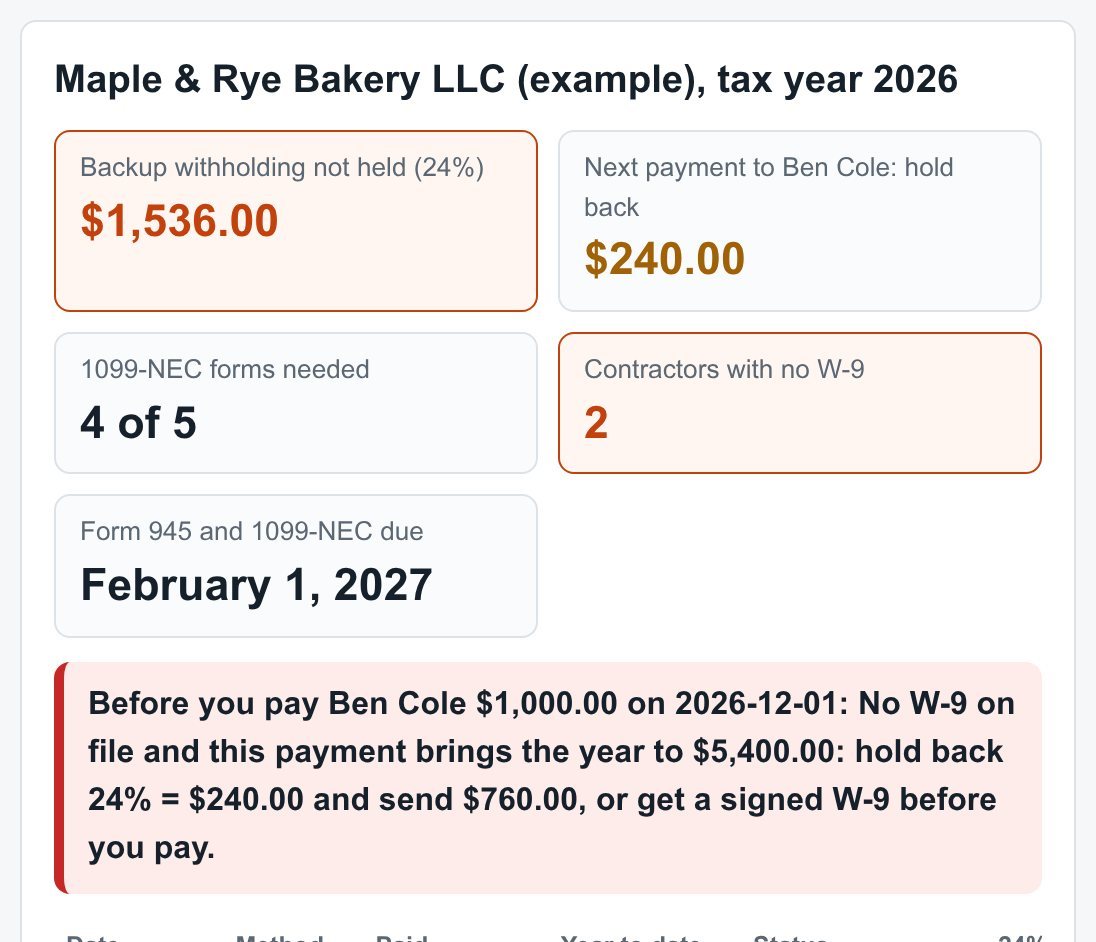 1099 tracker | payments, W-9 status, 24% backup withholding
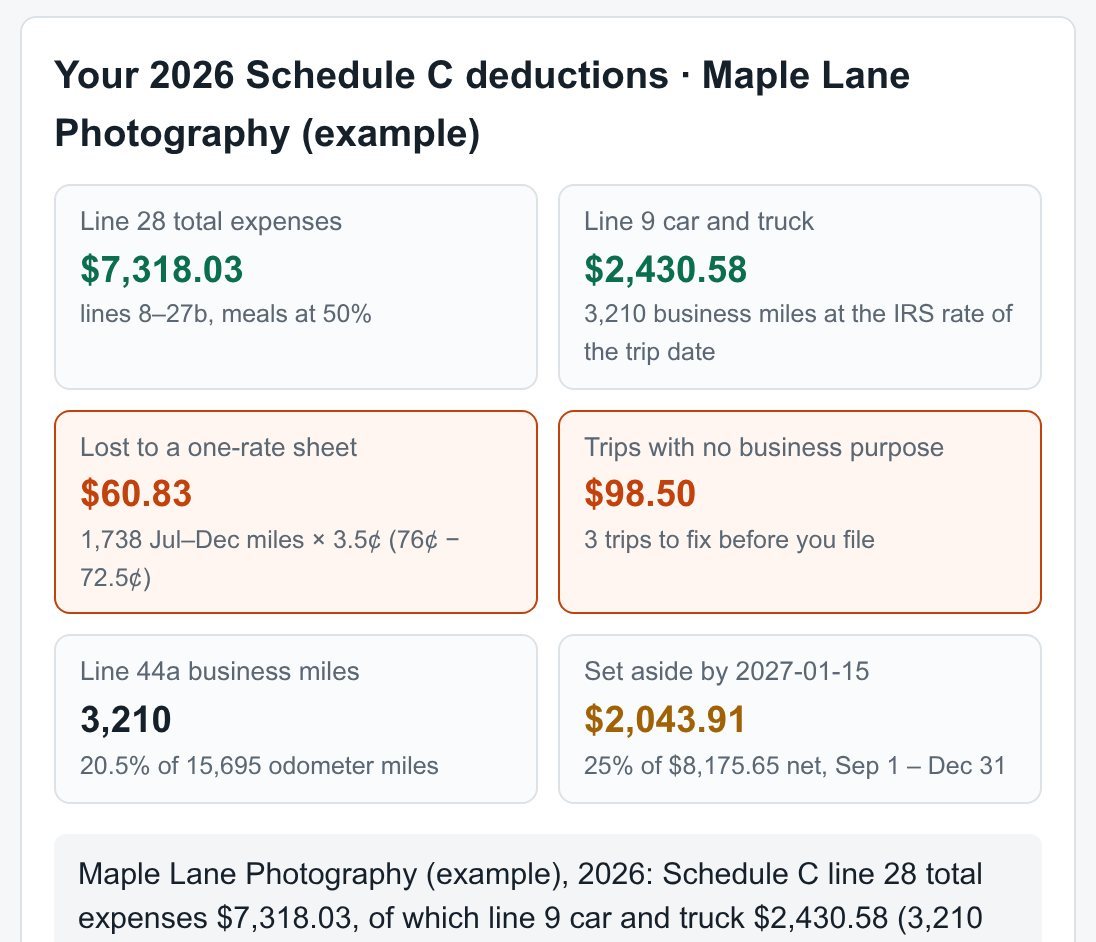 small business planner | Expense & Mileage Tracker | Schedule C 2026 | Estimated Tax Set-Aside
 Client portal and CRM for freelancers: proposals, contracts and invoices in one place
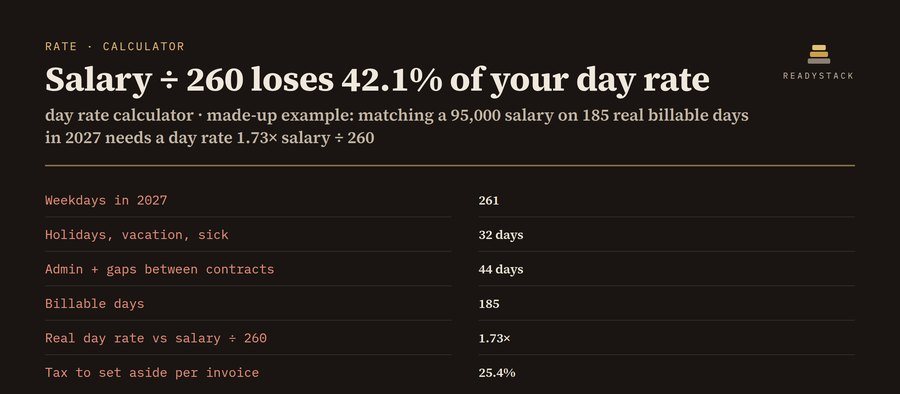 day rate calculator | freelance tax & billable days · US 2027 · UK 2026/27
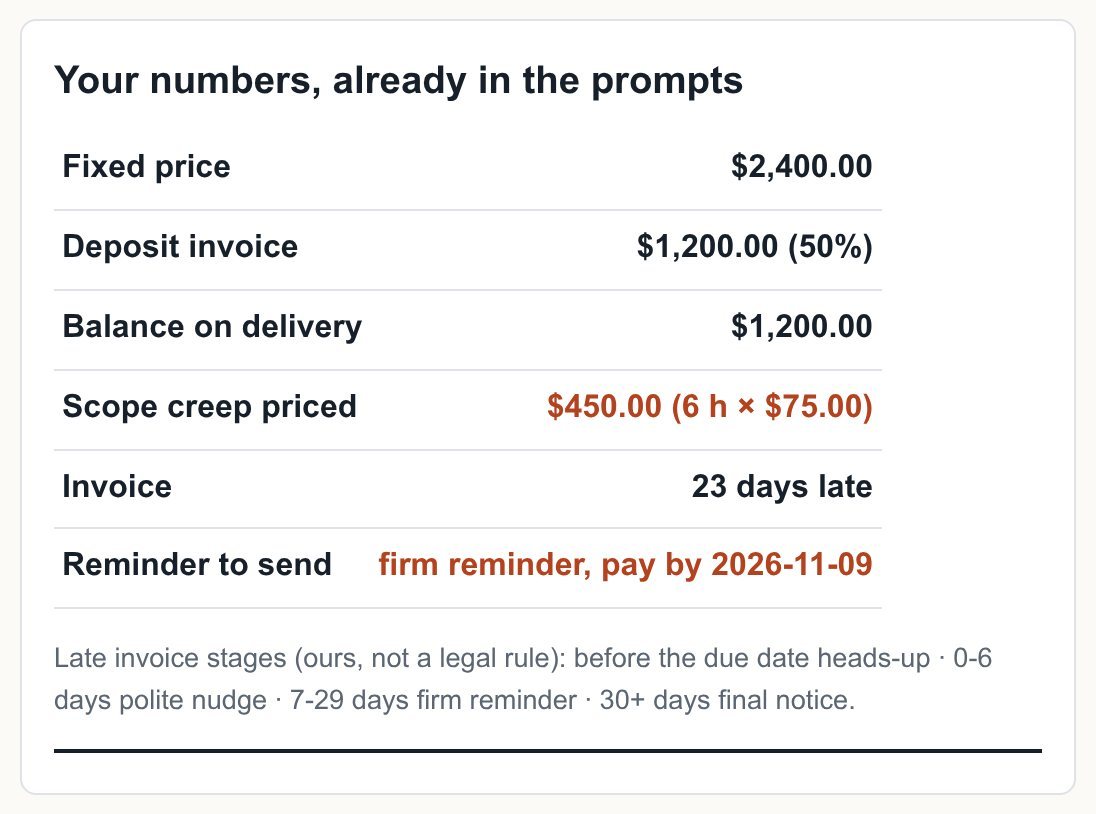 AI prompt packs for freelancers: pitch to paid invoice
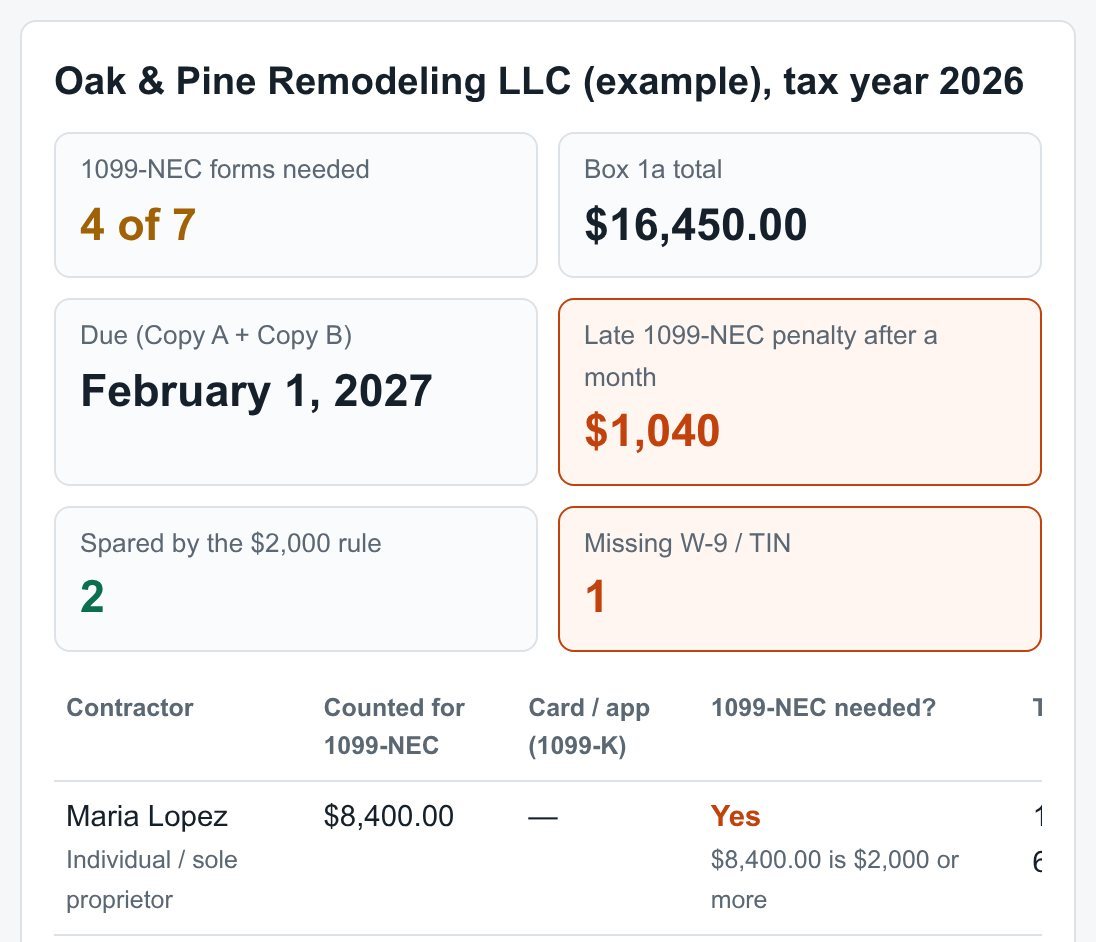 1099 nec fillable form 2026 | contractor log + Copy B
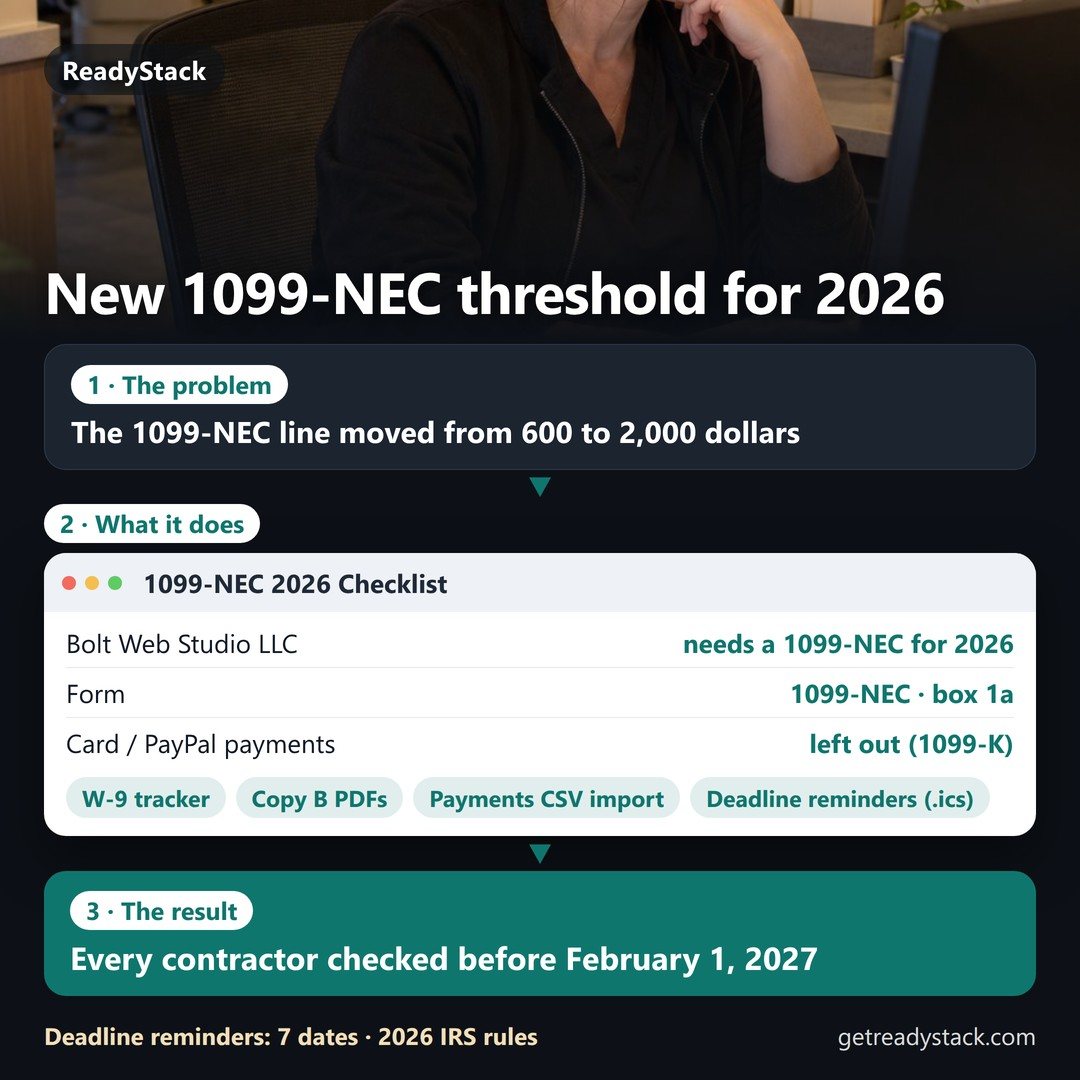 Which contractors need a 1099-NEC for 2026? Check each one against the $2,000 line.
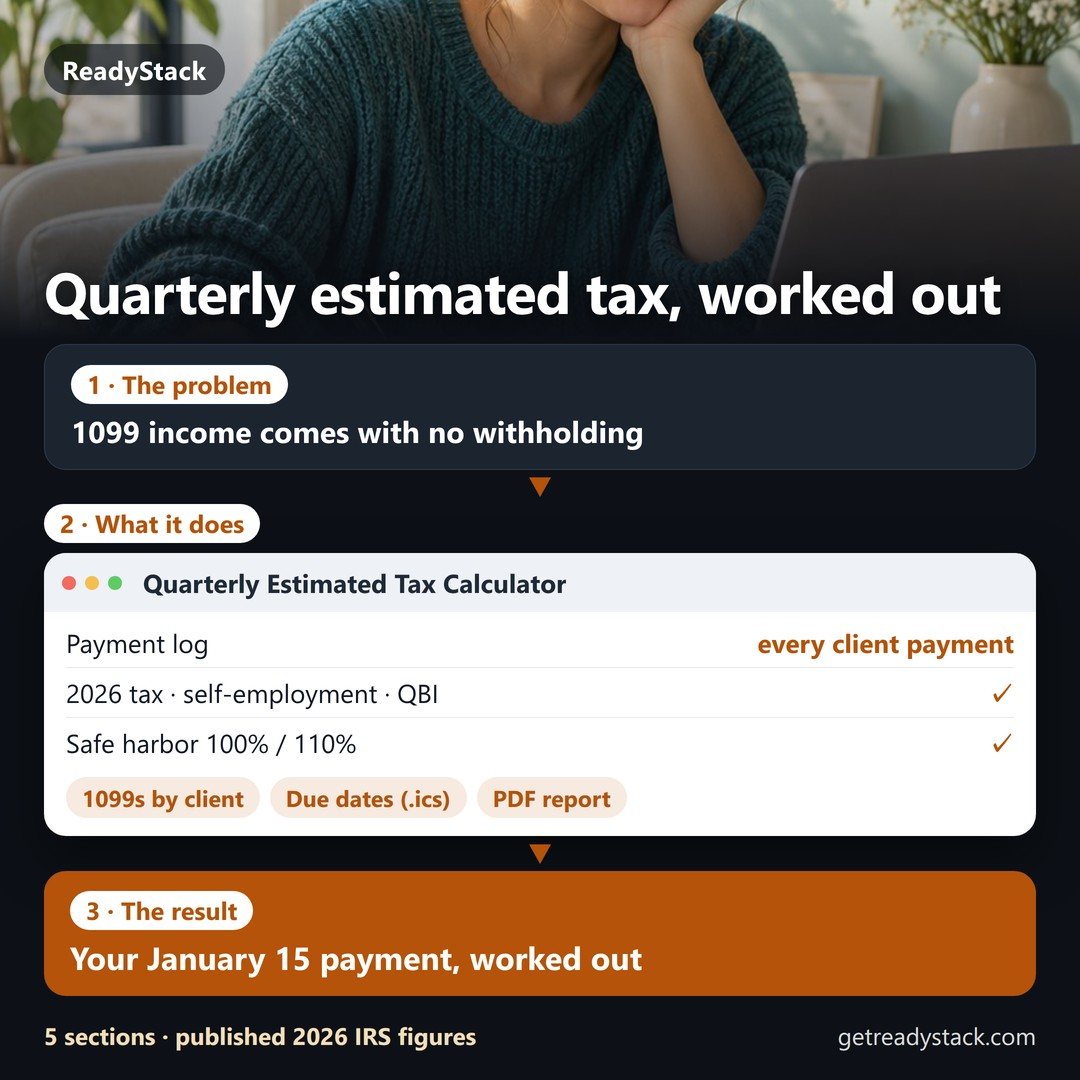 Quarterly estimated tax for 1099 freelancers — worked out from every payment you log